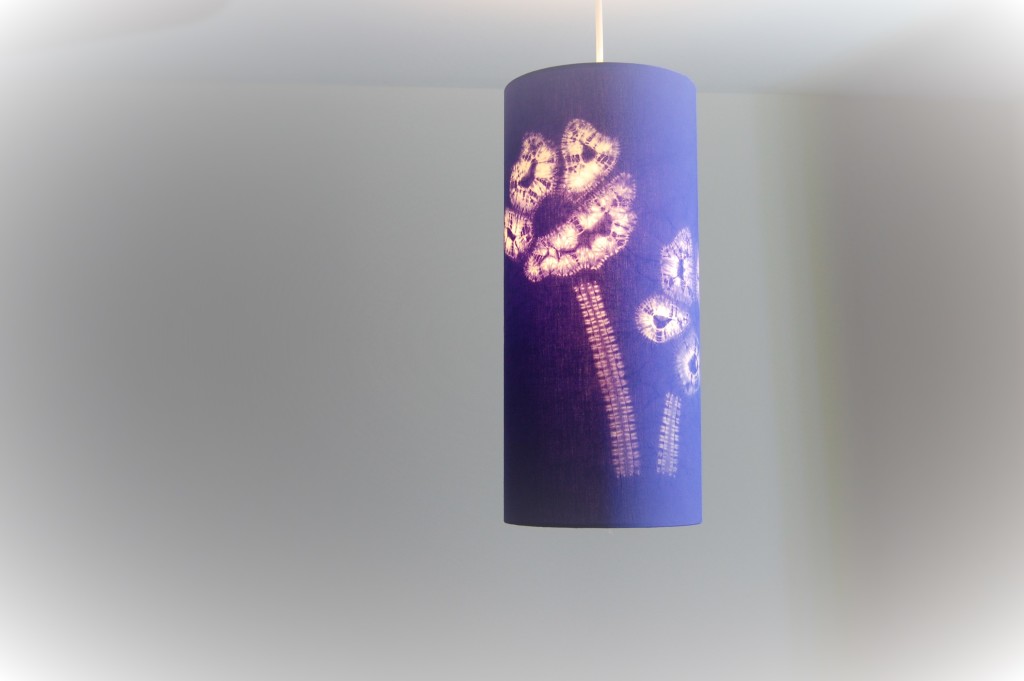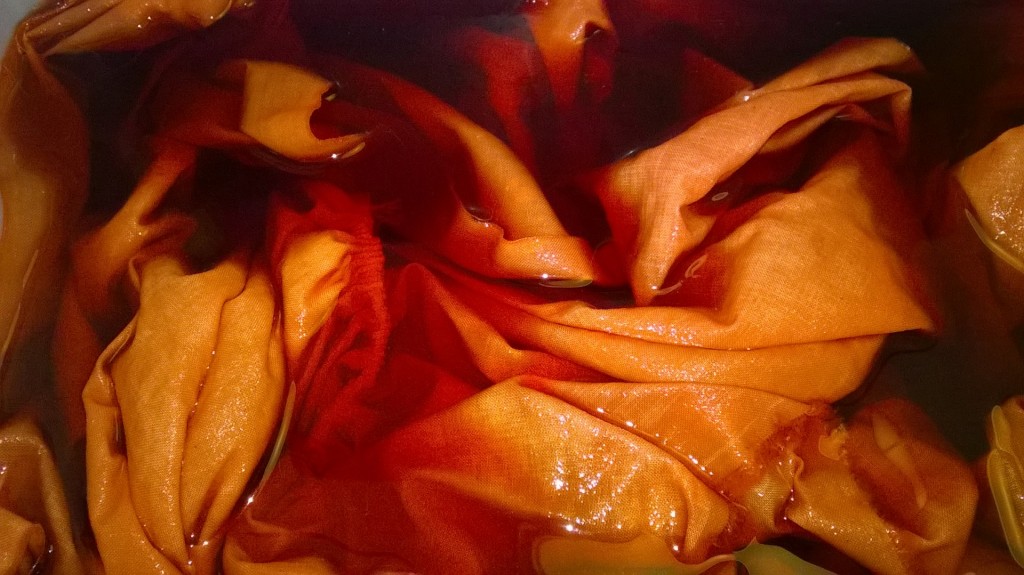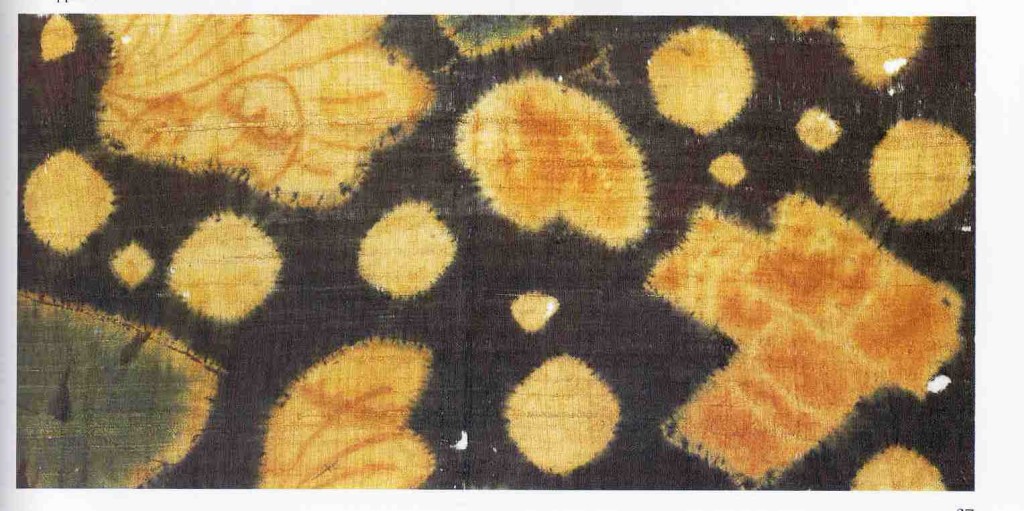
I thought I would share with you the process of making a natural dye with golden rod. It all came about because I was visiting a friend’s flower garden where she grows flowers for picking and the golden rod was only just going over. The flowers were no longer any good for flower arrangements.

Generally, it is important to pick plants when they have freshly come into bloom, when the leaves are young and fresh, it is no good if they are beginning to go to seed.
The result was I came home with a big bundle of dye stuff.
I always have some mordanted fabric, yarn and cotton ready for natural dyeing. I have put a note at the end about mordanting cotton and mordanting wool or visit this previous blog about mordanting.
The Process of Making a Natural Dye with Golden Rod
Quantities
I used 200 gr of flowers to 65 gr mix of wool fabric and yarn plus cotton textiles.
If you use fresh plants generally you will need about 300% of plant material to weight of fabric. Perhaps I could have used even more as I got some rather pale results. It is better to soak all the plant material for 24 hours before boiling up. I later checked my old dyeing notes and on a previous occasion I got a clearer gold/yellow from soaking the flower heads for 24 hours.
To Obtain the Dye Liquid for a Natural Dye with Golden Rod
Firstly, pick your flowers. Then cut the stems from the flower heads. This means you should get a brighter yellow but as you will see from my results this didn’t happen!
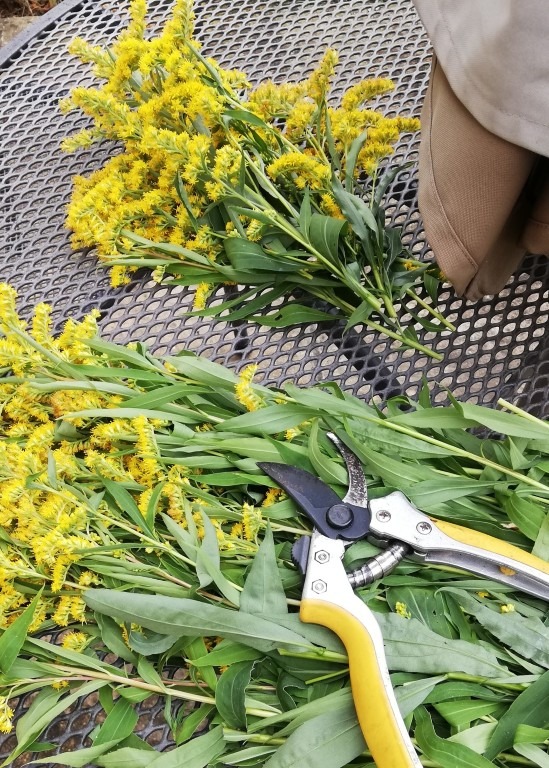
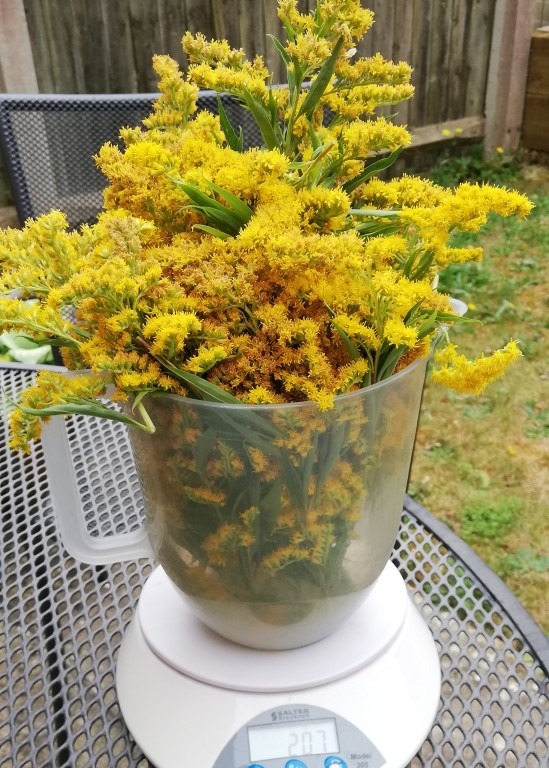

The second step is to put the flowers in a stainless-steel pan with enough water to cover. Bring this to the boil and boil for an hour or so to extract the colour.
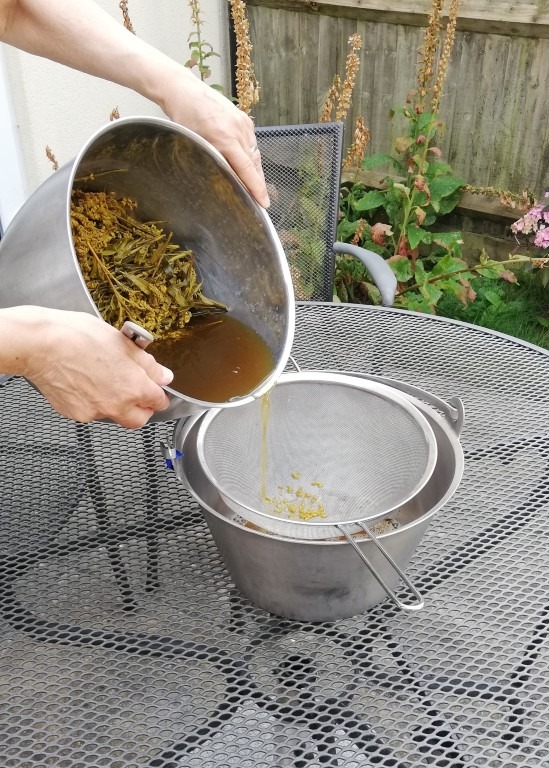
Following that, sieve the resulting liquid into another pan, leaving the spent flower material to be thrown away.

Dyeing the Fabrics with Golden Rod
Allow the water to cool, then enter the wetted fabrics* and wool into the dye bath. Top up with water if there is not enough water to cover the fabrics. * (It is important to soak the yarn and cloth for a few hours before putting them in the dyebath.)
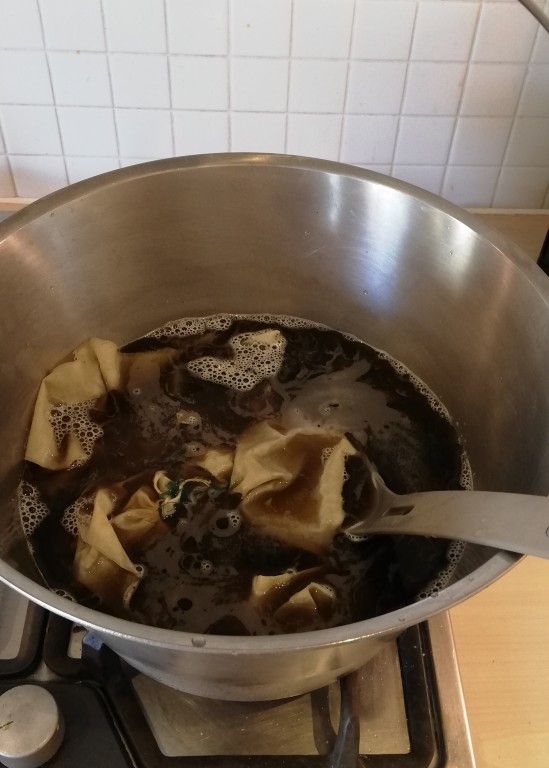
The next step is to then bring up to 82 degrees C. Bring up to temperature over 45mins and then maintain at that temperature for 45 mins.
Colour Modifying After Dyeing
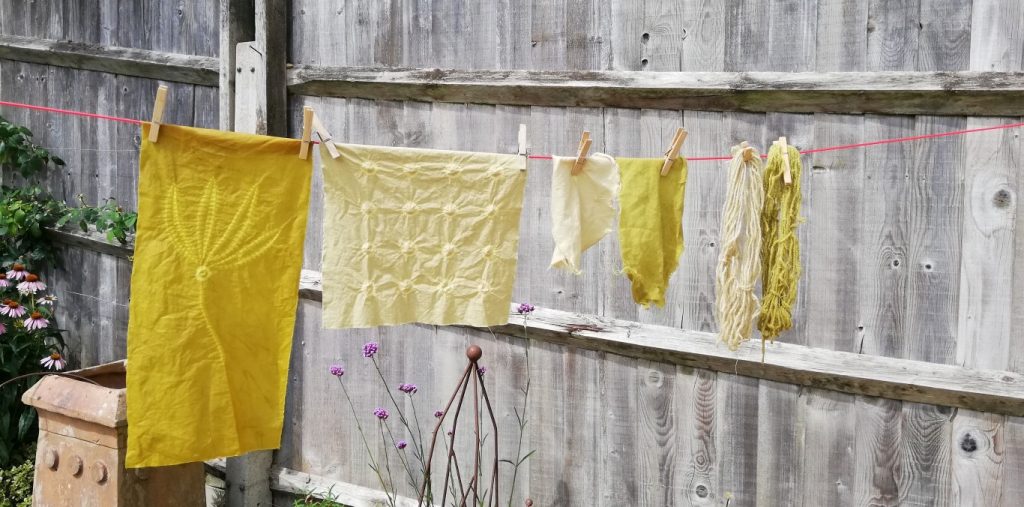
Due to the rather disappointing pale results I got I decided to add some copper sulphate to the dyebath to make the colour stronger, darker and greener. I got a rather pleasing bronze colour. I first lifted the fabrics from the dyebath and added a dissolved 3 gr of copper sulphate to the liquid. Finally, the fabrics are dropped back into the dyebath. It can be slightly heated or just leave the textiles in the bath until the desired colour is achieved. Rinse the fabrics well until the water runs clear.
The different results can be seen on my washing line below! I obviously couldn’t resist doing a bit of shibori. I will share the pattern for the seaweed on the far left in my next blog.
For more advice about shibori and natural dyes visit this blog.
A Brief Note about Mordant Recipes for Preparing Materials for Natural Dye with Golden Rod
For Wool & Silk
The usual mordant recipe for wool and silk is to use aluminium sulphate
This is the most common mordant, it is fairly non-toxic. The addition of cream of tartar brightens colours and helps permanently fix the alum to the wool. It increases the amount of alum taken up by the fabric and virtually eliminates any aluminium waste being left at the end of the process.
Recipe: 8% alum plus 7% cream of tartar
i.e 8g of alum and 7g of cream of tartar to 100g of wool or silk
Visit this blog here for more information
For Cotton & Linen
Cotton and linen need a different chemical, Alum acetate:
Recipe 5% alum acetate to 100g dry weight of fibres.
Dissolve the alum acetate in boiling water, stirring well to make sure all the fine powder has dissolved. Then add this to enough cool water to allow the fabric to move freely and stir again. Add the soaked fabric. Raise to simmering point slowly and then hold for an hour. Turn off heat and leave fibres to cool in the solution. Then rinse well. This can also be used for silk but it is advised to mordant cotton/linen on its own due to differing take up of mordant. You can prepare lots of pieces of fabric with the mordant, dry and store them for future use.
FREE Shibori Pattern Guide

Join my newsletter mailing list and download a FREE pattern for a Eight Petal Flower.