
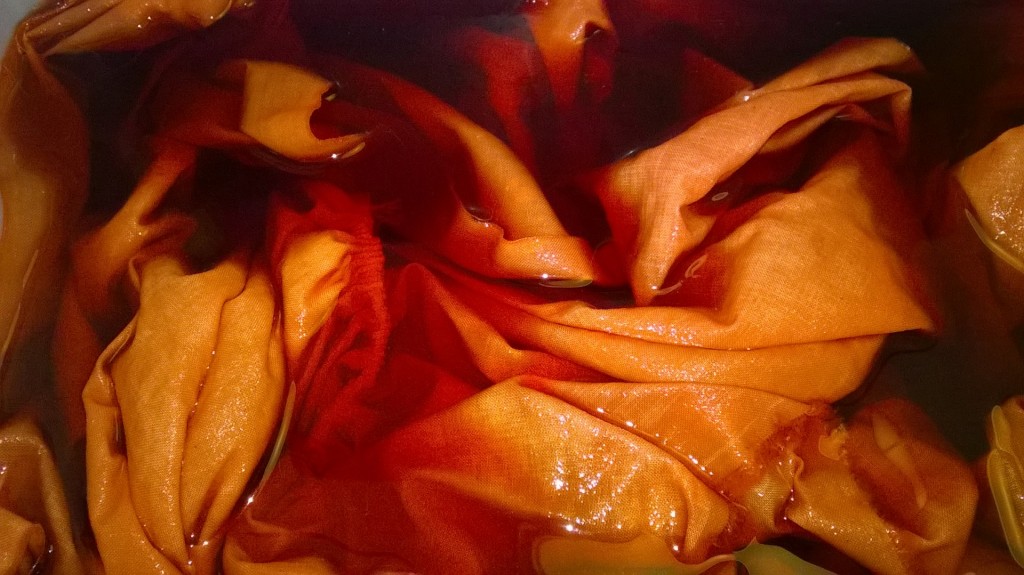
This article will outline for you what equipment is needed and what the process is for dyeing with fibre reactive dyes.
Equipment: What You need
- Kitchen Scales
- Plus a Small jewellery scales
- Plastic bucket/box for dye bath
- Plastic jug
- Assorted metal and plastic spoons
- Small jars for mixing dyestuff
- Face mask for wearing for handling dye until it is dissolved.
- Rubber gloves
- Cotton or silk fabric prepared for dyeing.
PLEASE NOTE: All equipment to be kept for dyeing only
Dye materials:
- Procion MX dyes (Note dust particles from fibre reactive dyes are harmful) Keep top well screwed on and avoid damp at all costs getting into dye pots. Once dye particles are damp they loose their potency.
- Where To Buy: UK/ George Weil or USA/ Dharma Trading
- Common Salt (ensures even take up of dye)
- Soda Ash (sodium carbonate) (ensures fixing of dye to fabric)
Rules of Dyeing with Fibre Reactive Dyes:
The most important rule is that amount of dye stuff used depends on the weight of the fabric BUT the amount of salt and soda ash depends on volume of water you are using.
Water must be enough to allow the fabric to move freely.
As a guide:
- 100 to 150 gr of fabric use 4 litres of water
- 200 to 300 gr of fabric use 6/7 litres of water
Fibre Reactive Dye Quantities
Usually use 2 to 4 grams of dye to every 100gr of dry fabric (depending on depth of colour required)
- 40 grams of salt to every litre of water
- 10 grams of soda ash to every litre of water
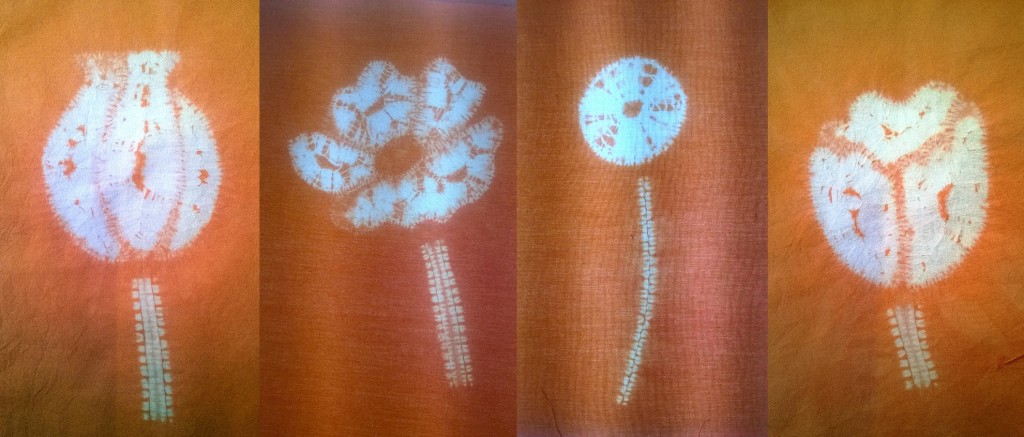
The Fibre Reactive Dye Process:
Preparation:
- Weigh dry fabric which has been scoured or prepared for dyeing
- Then put fabric into soak for 30 mins, or preferably overnight
- Calculate amount of dye needed
- Calculate amount of water needed, then calculate amount of salt and soda ash.
- Write down clearly what is required and keep to hand.
- Cover work area with newspapers, the smallest grain of dye stains!
IMPORTANT: Wear your face mask at this point!
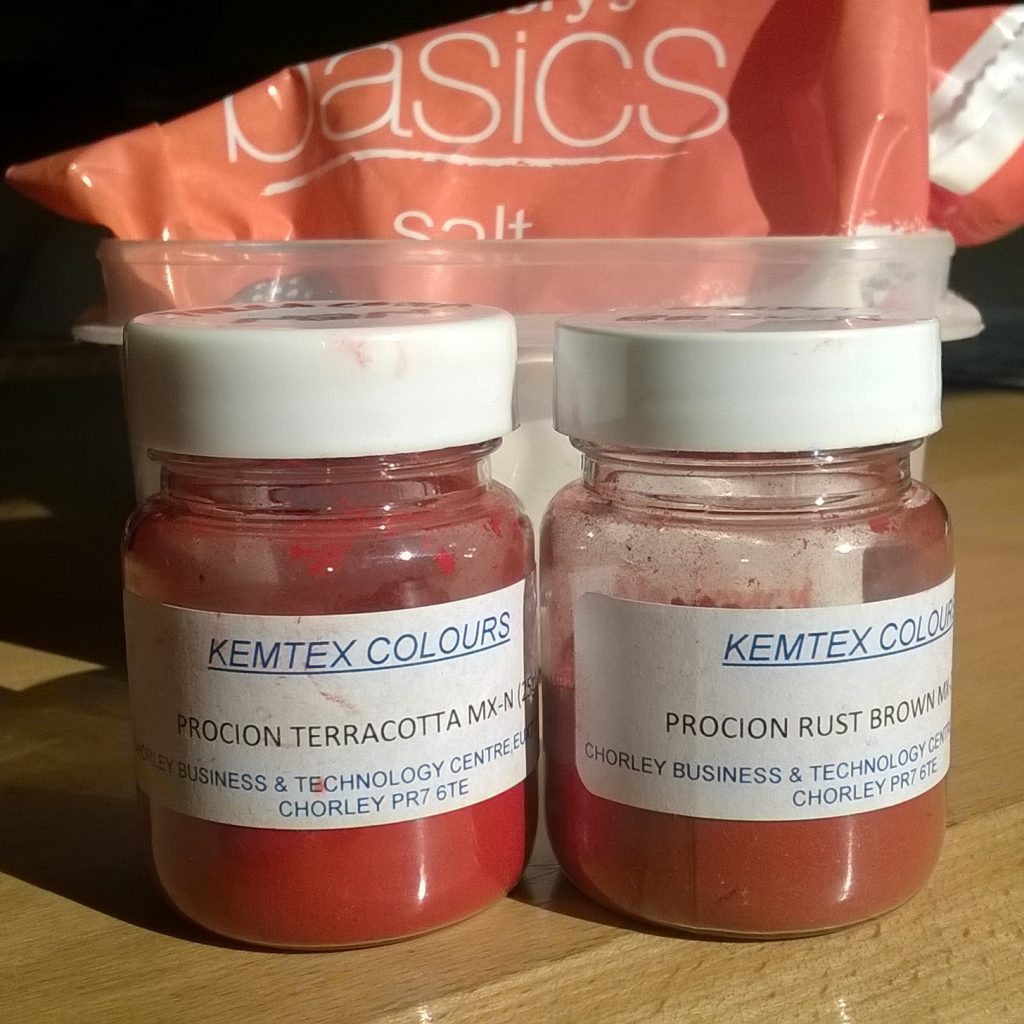

Making the Dye Bath
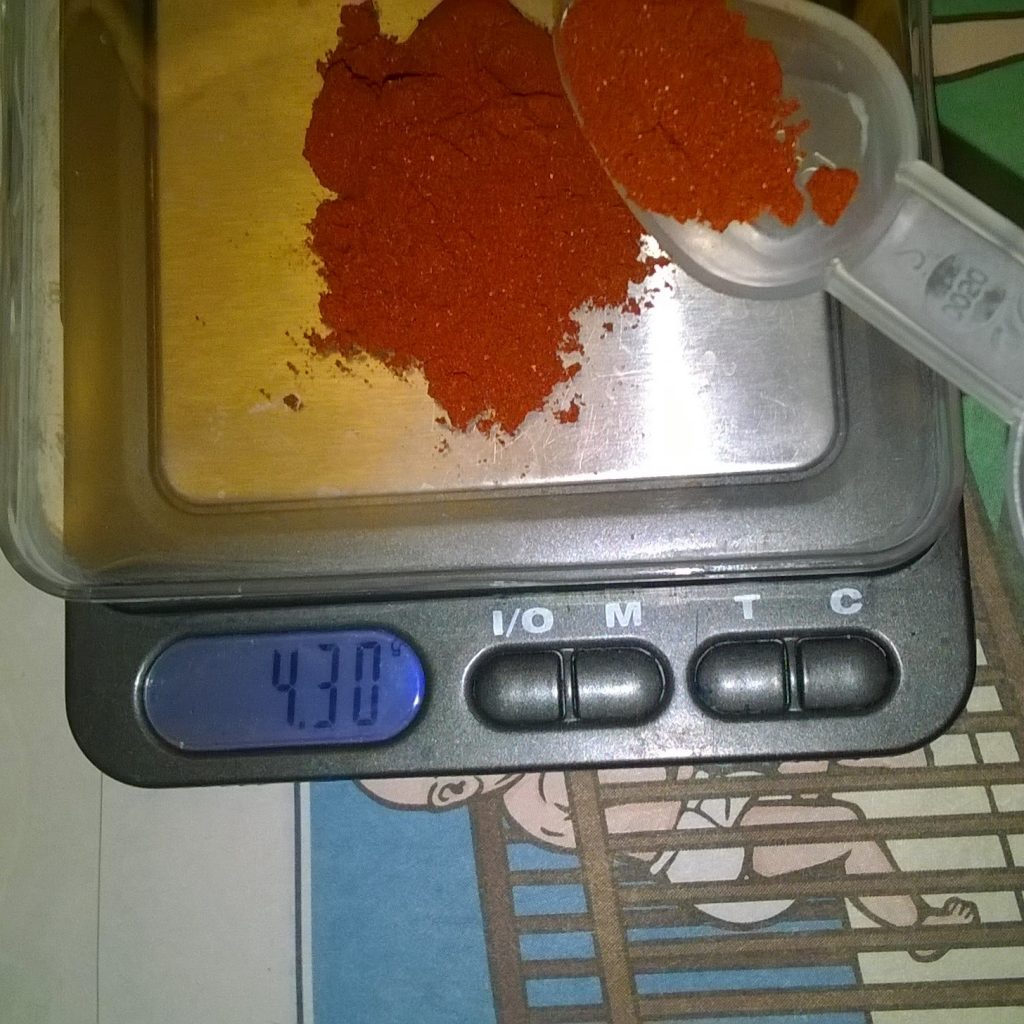
- Weigh out dye stuff. I use jewellery scales for this as it is a very small amount. I use an old screw or similar to “start the scales off” as a very small amount of dye sometimes takes time to register. I switch on the scales add the screw and then add dyestuff. This involves adding the weight of the screw to the weight of dye stuff you have calculated. Warning note this very clearly and keep to hand. So easy to make a mistake at point of weighing. I have done it!!
- Dissolve dye in a small amount of water and mix well.
- Weigh out salt and dissolve in measured amount of hot water and put in dye bath. Then add an additional amount of water to bring it up to the required total of water needed. Try and achieve a temperature of approx 40 degrees.
- Add dye solution to dye bath and stir well to disperse.

4. Adding dye to dyebath 
5. Fabric being agitated in dyebath
Dyeing the Fabric
- Add well wetted fabric and gently agitate.
- Continue this agitation off and on for 30 mins.
- Weigh and then dissolve required amount of soda ash in hot water in a separate jug. Again wear your face mask as soda ash has very fine particles.
- Lift the fabric from the dyebath gently. Do not squeeze.
- Add soda ash to the dyebath, stir thoroughly and replace fabric. Fabric colour will change slightly at this point.
- Gently agitate fabric in bath every 5 to 10 mins for 45 mins.
- Rinse fabric thoroughly in hot water finishing off in cold.
Hope you enjoy your experiments with dyeing. Here is a blog about dyeing with indigo. And if you are interested in dyeing with plants here is another blog about preparing fabrics for natural plant dyeing.
FREE Shibori Pattern Guide

Join my newsletter mailing list and download a FREE pattern for a Eight Petal Flower.


Comments are closed.