Today let’s look at what is a good cotton fabric for shibori. We are going to look at 3 different fabrics and clarify what difference the weave makes to creating a successful result.
Indeed, I receive many emails asking me questions about stitched shibori. I like to share these answers on my blog to help others too. It is always good to know others out there are having the same struggles!!
Usually it is individuals wondering why they haven’t had much success and often this is down to the type of fabric used. To clarify the selection of fabric is most important to achieve a good result with stitched shibori.
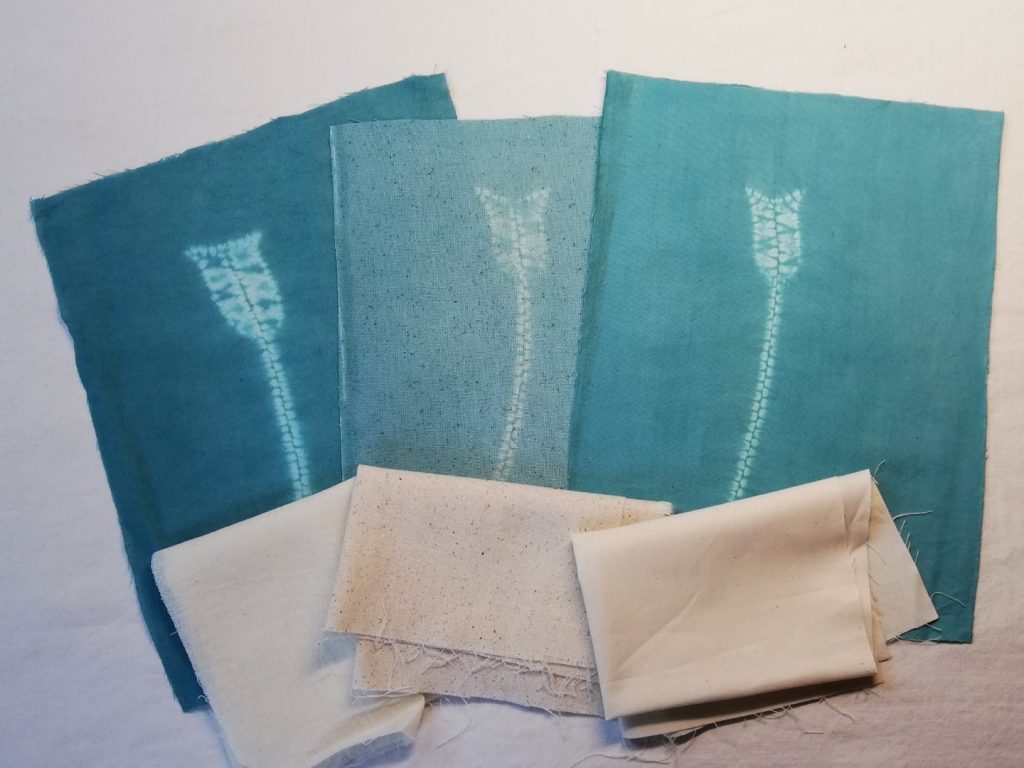
In this blog I am going to show you a simple shibori design on three different cotton fabrics.
General Guidance on Fabrics for Shibori
1. Fabric Weave
Shibori can be sewn into many fabrics, but I recommend starting with a nice soft cotton for your first experiments. The cotton fabric needs to be soft but quite tightly woven. If it is a loose weave the shibori pattern will lose its definition. I suggest a light cotton calico or voile. Some poplin and percale can be too close woven for ease of working the needle in and out of the fabric. Too much hard work!
Silk is a beautiful fabric to use but is difficult to work as it slips and slides. As a result of this it therefore needs tacking or basting to hold the folded shapes.
Additionally, take care if reusing old fabrics like cotton or linen sheets, because it is worn the fabric can rip or tear. You are putting the fabric under a lot of stress with the gathering, dyeing, and unpicking.
2. Fabric Weights
Many textile suppliers will be able to tell you the weights of their fabrics in grammes a square metre or ounces per square yard. As a guide a fabric weight of between 2.6oz sq yd/ 90g sq m and 5oz sq yd /170g sq m. My favourite fabrics are around 120g sq m.
3. Preparing Fabrics for Dyeing
Some fabrics have a finish on them, this needs to be removed before use, so that the dye adheres to the fabric. The process is called scouring. Wash the textiles at 60 degrees before you start to ensure any finish is removed using washing soda or detergent, in a machine or by hand. However, specialist textile suppliers have a range of fabrics described as Prepared For Dyeing (PFD). As a result, all the fabrics I am recommending are Prepared For Dyeing (PFD).
3 Examples of Fabric for Shibori
All 3 samples were sewn with the same thread and then dyed in the same dye pot.
1. Basic Cotton Muslin
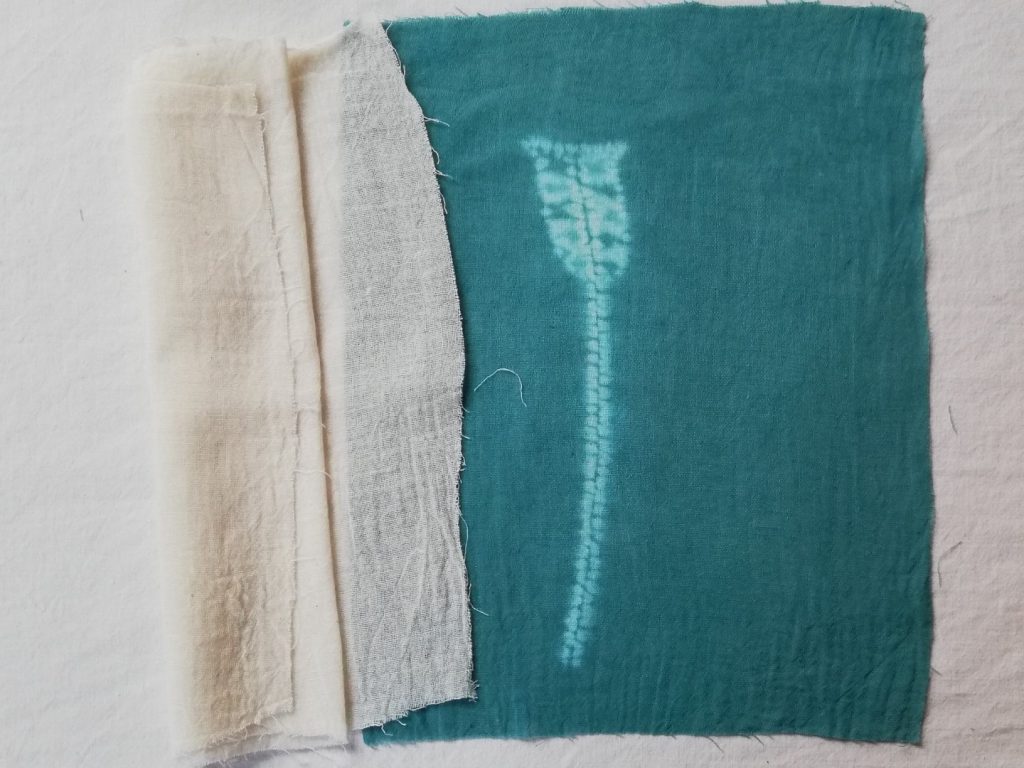
Muslin is too thin and too loose a weave. The pattern distorts and the outline is fuzzy. But sometimes I do deliberately use this quality of fabric if I want this effect!
2. Coarse Weave Fabric
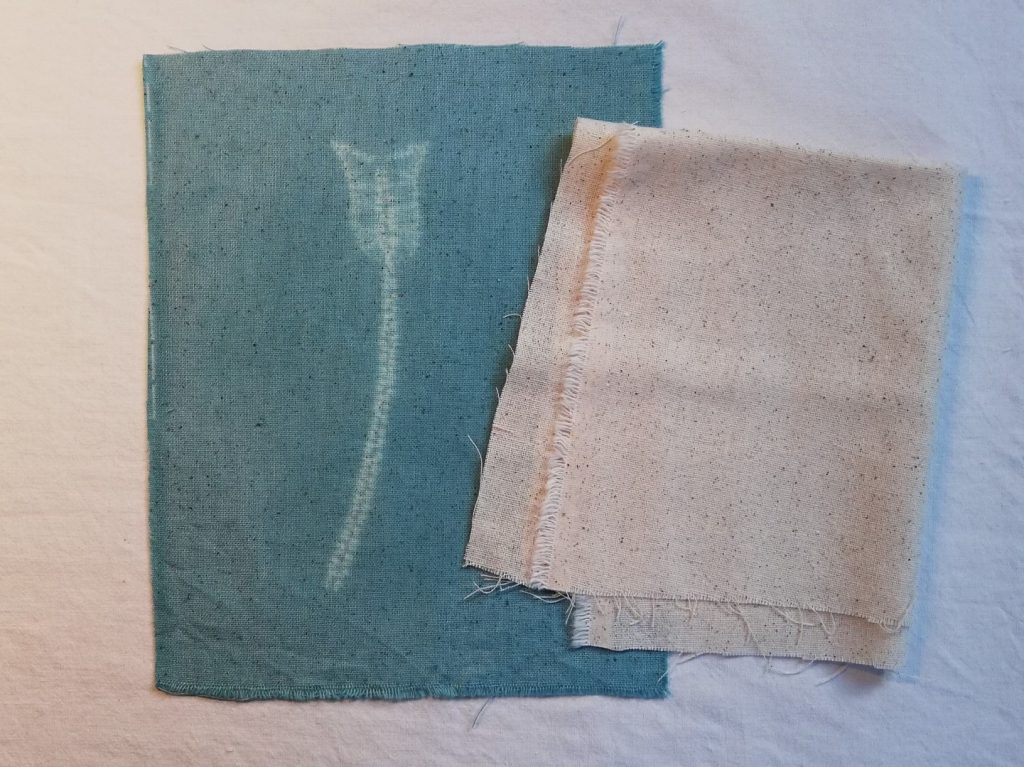
The pattern is not distorted here but it is too faint and indistinct as a coarser loose weave will allow dye to bleed into the stitched area. In a complicated shibori stitch resist design you will lose some of the pattern detail.
3. Poplin/Calico Type Fabric
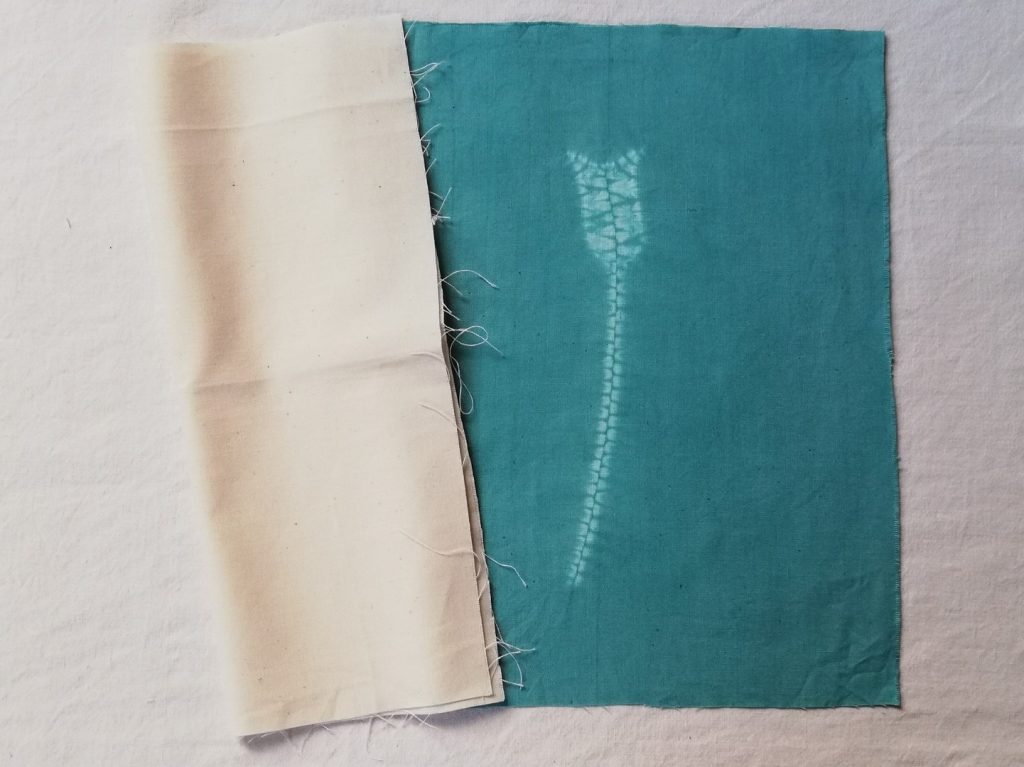
This is one of my favourite fabrics to use. It is soft to handle and has a tight weave which produces a sharp and distinct shibori pattern.
Suggested Fabrics For Shibori and Suppliers
All the fabrics here are from UK based companies but both companies will supply worldwide.
Miawa and Dharma Trading are useful suppliers to look at in the USA and Canada. The links I have given take you to the actual pages for the most suitable fabrics.
Finally, here are my three favourite fabrics for shibori at the moment.
Calico AJ404 Scoured Natural from Whaleys of Bradford
Classic Hemp Cloth from The Hemp Shop
Mid Hemp Muslin (This is not a muslin it is more like a lightweight linen) This is particularly good for making cushions, slightly heavier in weight than the Classic Hemp cloth but still easy to work with shibori stitching.
In conclusion, I hope these stitched examples show how important it is to choose the right fabric for shibori and give you some useful guidance in your fabric selection.
The information in this blog is taken from my online shibori course “Create a Collection of Flowers in Shibori Stitch Resist”. If you would like to learn more to ensure your success with your shibori consider joining my course. Information about fabrics and the best colours to use for shibori and wonderful designs for you to make. Step by step instructions to teach you how to create with shibori stitch resist. Here is a lovely cushion which you will learn how to make on the course.

FREE Shibori Pattern Guide

Join my newsletter mailing list and download a FREE pattern for a Eight Petal Flower.